
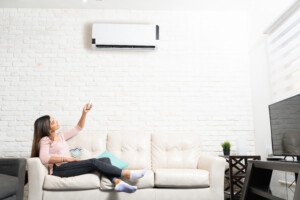
 Mini-split systems offer flexible heating and cooling without the need for any ductwork. Many homeowners in New York and Pennsylvania choose mini-splits for additions, older homes, or targeted temperature control in specific rooms. If you’re considering installing a mini-split, it’s important to understand how much energy a mini-split uses, so you can better estimate your monthly energy costs.
How Mini-Split Energy Use Is Measured
Mini-split electricity usage is typically measured in watts and kilowatt-hours (kWh).
Watts vs. kWh: What the Numbers Mean
Though mini-splits are rated in watts, which measure how much power the system uses while in operation, your electric bill charges are based on kilowatt-hours. Kilowatt-hours measure how much electricity you use over time.
You can estimate energy usage in a mini-split using this formula:
Watts ÷ 1,000 x hours used = kWh consumed
For example, let’s say you run a 1,000-watt mini-split for 8 hours.
1,000 ÷ 1,000 x 8 = 8 kWh per day
Figuring out how many kWh you use per day can help you determine the total impact on your electric bill.
How Much Energy Does a Mini-Split Use by Size?
Mini-split energy usage varies depending on the system’s efficiency, usage patterns, and size (BTU rating). Higher-capacity units have a higher BTU rating and can cool or heat larger areas, which generally results in higher electricity consumption.
Remember that Seasonal Energy Efficiency Ratio (SEER) ratings affect energy draw. A higher SEER rating typically means the unit uses fewer watts to produce the same amount of heating or cooling.
| BTU Rating | Typical Wattage | Daily kWh (8 hrs) |
| 9,000 BTU | 500–750W | 4–6 kWh |
| 12,000 BTU | 800–1,200W | 6.4–9.6 kWh |
| 18,000 BTU | 1,500–2,000W | 12–16 kWh |
| 24,000 BTU | 2,000–2,500W | 16–20 kWh |
Your actual usage depends on outdoor temperatures, thermostat settings, your insulation quality, and how often you run the system.
How Much Does It Cost to Run a Mini-Split Per Month?
Monthly operating costs for a mini-split depend on electricity rates, system size, and how often you run the system.
The Math Behind Your Monthly Bill
Let’s say you’re running a 12,000 BTU mini-split for 8 hours per day at home in Pennsylvania. For that BTU rating, you’d approximately use 1,200 watts while in operation.
Watts ÷ 1,000 x hours used = kWh consumed
1,200 watts ÷ 1,000 x 8 = 9.6 kWh per day
9.6 kWh x 30 days = 288 kWh per month
If residential electricity costs approximately $0.20 per kWh, your estimated monthly operating cost would be:
288 kWh x $0.20 = $58 per month
Electricity rates in New York and Pennsylvania can vary depending on your location, so check your supply plan for accurate calculation.
Single-Zone vs. Multi-Zone Cost Difference
Single-zone mini-splits control one room or area. They typically have lower baseline operating costs and simpler usage patterns.
Multi-zone systems connect several indoor units to one outdoor unit. While they can use more electricity overall, they also allow greater control over which rooms are being heated or cooled at a given time. This flexibility can help reduce unnecessary energy usage in unoccupied areas.
Does a Mini-Split Use More Energy for Heating or Cooling?
In most climates, mini-splits use more electricity for heating than cooling. During winter, systems work harder to maintain indoor temperatures when outdoor temperatures are much lower. Mini-splits may also run defrost cycles during particularly cold weather, temporarily increasing energy usage.
For example, a 12,000 BTU mini-split may use approximately 10-15 kWh per day for heating, but only 8-12 kWh per day for cooling. However, your actual usage varies depending on the climate and the quality of your insulation.
What Factors Drive Mini-Split Energy Use Up or Down?
Several factors affect how much electricity a mini-split uses throughout the year.
Outdoor Temperature
Extreme outdoor temperatures force the system to work harder to maintain indoor comfort. Colder winters and hotter summers increase electricity usage.
How Often You Run It and at What Temperature
Running the system continuously at very low or very high temperature settings increases energy consumption. Moderating your thermostat settings can improve overall efficiency.
Unit Age and Maintenance
Older systems often lose efficiency over time, especially if filters and coils aren’t cleaned regularly. Routine maintenance helps maintain airflow and efficient system performance.
Insulation and Air Leaks
Poor insulation in your home allows heated or cooled air to escape, forcing the mini-split to run longer. Sealing drafts and improving insulation can help increase energy efficiency.
System Sizing
An oversized or undersized unit may operate less efficiently than a properly sized system for your space. Choosing the correct BTU rating for your needs allows for balanced performance.
How Do I Keep My System Safe?
Because mini-splits run frequently throughout the year, they require reliable, professional support in order to function properly. While utilities expect customers to cover repair costs, Agway helps pay for them through Agway EnergyGuard® — a value-added program that offsets the costs of restoring your heating, cooling, and electrical systems*.
When the need for repair occurs, our customers don’t waste time searching for qualified support. They contact us instead. Once we receive your request, we dispatch a certified contractor or electrician to diagnose and troubleshoot the problem. There are no service fees or deductibles either. We pay for the visit and all covered parts.
Don’t let an unexpected issue derail your household or small business. Reach out to Agway for support you can count on!
Mini-Split FAQs
Does a mini-split use a lot of electricity?
Compared to traditional HVAC systems, mini-splits typically use less electricity, especially when properly sized and maintained. Actual usage depends on your system size, efficiency rating, and operation frequency.
Is a mini-split cheaper to run than central air?
In many situations, yes, a mini-split is cheaper to run than central air. Mini-splits allow for targeted heating and cooling, which can reduce unnecessary energy use compared to heating and cooling the entire home through ducts.
Does a mini-split use electricity when it’s not heating or cooling?
Yes, a mini-split still uses a minute amount of energy when not heating or cooling. Like many other appliances, it uses a small amount of standby power even when not running.
Is it cheaper to run a mini-split at a constant temperature or adjust it throughout the day?
Moderate, consistent temperature settings are often more efficient in the long run than large temperature swings. Frequently turning your system on or off can cause it to work harder to regain the desired temperature.
How many mini-splits do I need for a whole house?
The number of mini-splits you need for your house depends on your home’s layout, insulation, and heating or cooling needs. Some homes use a single-zone system, while others require multiple indoor units connected to one outdoor condenser.
How can I find out if my electricity plan is right for running a mini-split?
You can review your supply rate and usage patterns to determine if your current electricity plan fits your needs. If you’re a customer in New York or Pennsylvania, contact Agway to learn more about available electricity supply options for your home.
*Coverage depends on commodity purchased.


