
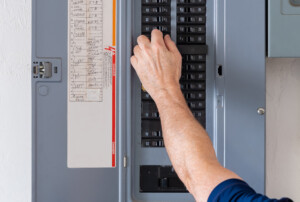
 Your electrical panel is the control center for your home’s energy system. This panel distributes power to individual circuits and protects wiring from overloads that can cause equipment damage or even fire. As more homes add powerful new appliances like central air conditioning and smart technology, older electrical panels may struggle to support the increased electrical demand.
In this article, we’re sharing 7 key signs your electrical panel needs an upgrade, so you can address capacity concerns before they become emergencies.
What is an Electrical Panel and What Does it Do?
An electrical panel receives electricity delivered to your home by your local utility and directs it to the circuits controlling your lights, outlets, appliances, and other major electrical systems. A breaker protects each circuit, to ensure it doesn’t receive more current than it can handle. When a circuit becomes overloaded or develops a fault, the circuit breaker trips, interrupting the power flow to prevent overheating.
Your electrical panel doesn’t generate electricity, but it does distribute it safely throughout your home and prevents circuits from carrying more current than their wiring is rated for.
7 Key Signs You Need an Electrical Panel Upgrade
There are several warning signs that may indicate that your electrical panel needs an upgrade. However, keep in mind that a single warning sign doesn’t necessarily mean your entire panel needs replacement. If you notice any of these signs, contact a licensed electrician to inspect the panel, determine the source of the problem, and repair the issue.
1. Frequently Tripping Breakers
Circuit breakers may trip occasionally when too many devices are operating on the same circuit. When the same breaker trips repeatedly, this could mean the circuit is overloaded or another electrical problem is present.
Because circuit breakers are designed to interrupt unsafe electrical flow, repeatedly resetting one without addressing the cause can allow an underlying issue to continue worsening. An electrician can help determine if you need another circuit, a new breaker, or a larger panel.
2. Flickering or Dimming Lights
Flickering or dimming lights may occur when an air conditioner, microwave, vacuum, or other appliance turns on. This indicates that the electrical system may be struggling with the sudden demand. The problem could be an overloaded circuit, a loose connection, voltage fluctuations, or insufficient capacity.
A brief flicker doesn’t necessarily mean you need a new panel, but frequent occurrences, especially if it affects multiple rooms, indicate you should have your system inspected.
3. Buzzing or Humming Sounds from the Panel
Your electrical panel should operate quietly. Persistent buzzing, humming, crackling, or sizzling sounds suggest issues with a loose connection, failing breaker, or electrical arcing. If you notice these sounds, don’t attempt to remove the panel cover or tighten electrical components yourself. The panel contains energized parts that may remain dangerous even when individual breakers are turned off, so it’s best to leave this work to a licensed professional.
4. Warm Outlets, Scorch Marks, or a Burning Smell
Warm outlets, scorch marks, melted plastic, or burning odors indicate issues with overheating or damaged wiring. These warning signs in particular should never be ignored, especially when they appear near the electrical panel or recur when you use specific appliances.
Knowing how to respond to electrical emergencies involving heat or burning odors can reduce the risk of injury or additional damage to your home. Stop using the affected outlet or appliance immediately, turn off the circuit if safe to do so, and contact a licensed electrician for a full inspection.
Call emergency services if there is an active fire, visible smoke, or an immediate danger, and never use water on an electrical fire.
5. Breakers That Won’t Reset or Are Physically Damaged
A breaker that won’t remain in the reset position may be responding to an active fault somewhere on the circuit. It could also be worn, damaged, or otherwise not operating correctly.
Cracked breakers, corrosion, missing panel covers, exposed openings, or breakers that feel loose should also receive professional attention. Never force a breaker to stay on or repeatedly reset it – doing so could prevent the breaker from performing its safety function and result in an electrical emergency.
6. An Outdated Panel Type
Older panels often have fewer circuits or outdated components that weren’t designed for modern household energy demand. Homes built decades ago may have started with 60-amp or 100-amp service, while modern homes typically use 200-amp service to support larger appliances and multiple high-draw energy systems.
Age alone doesn’t make a panel unsafe, but panels over 25 years old should get professionally evaluated, especially if they show corrosion or physical damage.
Additionally, some older panels or fuse boxes may be difficult to repair because replacement parts are no longer readily available. A licensed electrician can identify your panel type and help determine if it can be serviced or needs to be replaced.
7. Not Enough Outlets or Circuits for Your Home’s Needs
Frequent dependence on extension cords, power strips, and outlet adapters may mean your home doesn’t have enough circuits or receptacles. This is especially common in older homes that were wired before computers, entertainment systems, and countertop appliances were the norm.
You may need additional circuits before adding new large appliances, such as an electric range, clothes dryer, or EV charger. If your current panel doesn’t have open spaces or lacks sufficient capacity, you may need an upgrade before those additions can be safely installed.
Planning an Electrical Upgrade? Start With Your Panel
Before installing a major electric appliance or adding new technology, ask a licensed electrician to evaluate your panel, service capacity, wiring, and available circuits. Adding a high-demand appliance without confirming that your system can support it can result in overloaded circuits, repeated breaker trips, or an installation that doesn’t meet current requirements.
Save On Covered Repairs with Agway®
Agway Energy Services® supplies electricity to homes and small businesses in New York and Pennsylvania. Customers also receive access to our EnergyGuard program, which helps cover qualifying repairs to your existing heating, cooling, and electrical systems*, to help keep long-term repair costs under control. Because coverage depends on the commodity purchased and the type of repair needed, call Agway first to determine if an electrical repair is covered before arranging service.
Electrical Panel Upgrade FAQs
How long does an electrical panel last?
Electrical panels can last anywhere from 25-40 years, but age is only one factor in determining whether you need an upgrade. Installation quality, moisture exposure, corrosion, and household demand also impact whether a panel has surpassed its lifetime. If your panel is more than 25 years old and frequently trips, makes unusual sounds, or shows physical deterioration, contact a licensed electrician for an evaluation.
What is the 80% rule for electrical panels?
The 80% rule means that a standard circuit should be sized enough that a continuous load (operating three hours or longer) does not exceed 80% of the breaker’s rating. For example, a 20-amp circuit generally supports up to 16 amps of continuous load, using the 80% rule.
Can I upgrade my electrical panel without rewiring my house?
In many cases, yes, you can upgrade your electrical panel without rewiring your entire house. An electrician may be able to expand the panel while keeping wiring that’s safe, properly installed, and compatible with new equipment. You may need rewiring if your home contains damaged insulation, underground circuits, unsafe connections, or wiring that can’t support the required loads.
What size electrical panel do I need for my house?
The appropriate size electrical panel for your home depends on its square footage, appliances, heating and cooling systems, and any planned electrical additions. While 200-amp service is common in today’s homes, some properties may need less capacity, while others need more. An electrician can perform a formal load calculation to determine the best size for your needs.
Does upgrading my electrical panel affect my energy bill?
No, upgrading your electric panel doesn’t automatically affect your energy bill. Though your panel distributes power, it doesn’t make your appliances use less energy or change your electricity supply rate. However, your energy bill may increase if you add more high-energy appliances to your home after upgrading your electrical panel. Contact Agway to learn more about your energy bill and to explore available electricity plans.


