
 Older homes offer character and charm that many newer homes can’t replicate. However, many of these homes were built long before today’s electrical demands existed. From central air conditioning to larger kitchen appliances, the average household now uses significantly more electricity than homes did just a few decades ago.
If you have an older home, it’s important to understand how older electrical systems operate. In this blog, we’ll share more about how electrical systems were designed in the past and when they need upgrades to help you keep your home safe and efficient.
How Electrical Standards Have Changed Over the Decades
Electrical systems have changed significantly over the last century. As technology advanced and homes needed more electricity, building codes and wiring practices had to adapt to improve capacity and safety.
Pre-1940s:
Many homes built before the 1940s were wired primarily for lighting and a small number of electrical outlets. Large household appliances weren’t common, so their internal wiring wasn’t designed to handle today’s electrical demands.
1940s – 1950s:
During this time period, many homes were wired with cloth-covered wiring, sometimes called “rag” wiring. Though it met safety standards at the time, the cloth insulation can dry out, become brittle, and crack over time, resulting in exposed wiring and electrical hazards.
1960s – Early 1970s:
As copper prices increased, builders started using aluminum wiring in residential construction. Though aluminum wiring isn’t inherently unsafe, improper installation or aging connections can increase the risk of overheating and electrical fires if your system is not properly maintained.
1970s Onward:
Starting in the 1970s, regulatory agencies began adding important safety improvements to their electrical codes, like Ground Fault Circuit Interrupters (GFCIs) and later Arc Fault Circuit Interrupters (AFCIs). These devices reduce the risk of electrical shock and fire by detecting dangerous electrical conditions.
Today:
Today’s homes are designed for significantly higher electrical loads. Modern electrical systems are built to support central air conditioning, electric vehicles, smart home technology, entertainment systems, and more all at the same time.
Common Electrical Problems in Older Homes
Even well-maintained older homes can develop electrical issues over time, since their systems were designed for a different era.
Outdated Wiring
Older wiring may no longer meet current electrical codes or safely support today’s household demands. Aging insulation, deteriorating connections, and outdated materials can all significantly increase safety risks.
Missing Grounding + Too Few Outlets
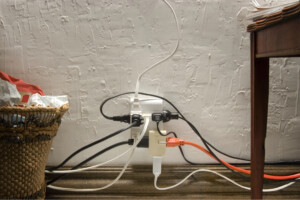
Modern households typically need a large number of outlets for various appliances. Older homes normally don’t have enough compared to modern needs. As a result, homeowners often have to rely on extension cords and power strips, which can overload circuits if not correctly used.
Some older systems may also not be grounded properly, which reduces protection against electrical faults and surges.
Wear and Tear
Electrical systems naturally experience wear over time, just like all other systems in your home. Loose connections, aging breakers, and worn outlets can all affect performance and increase the likelihood of more serious issues down the line.
How Aging Electrical Systems Drive Up Your Energy Bills
Older electrical systems can also contribute to higher energy costs. As wiring and electrical components age, they can become less efficient at delivering electricity throughout your home. Overloaded circuits can produce excess heat, causing phantom electricity draw, and worn electrical equipment can require more power to perform the same tasks as before, resulting in a higher electricity load.
If you’ve noticed your electricity bill increasing but haven’t made major changes to your daily habits, you may want to evaluate both your electrical system and your overall energy usage.
Signs Your Electrical System Is Struggling
Some electrical issues develop slowly over time, so they can be hard to notice at first. Watch for warning signs that could indicate that your home’s electrical system needs professional attention. Some signs include:
- Flickering lights when appliances start
- Frequent circuit breaker trips
- Warm, discolored, or loose outlets
- Burning smells near outlets or your electrical panel
- Buzzing sounds from switches or breakers
- Rising electric bills with no major change in household usage
If you notice several of these symptoms together, you may want to schedule an inspection with a qualified electrician to determine the root cause of the issues.
Dangers of Outdated Electrical Systems
Electrical issues can pose serious safety risks if left unaddressed.
Fire Risk
Electrical failures are one of the leading causes of electrical fires. Outdated wiring, overloaded circuits, loose electrical connections, and deteriorating insulation can all produce excessive heat. Over time, that heat can ignite nearby building materials, resulting in a fire.
Electrocution
Damaged wiring, ungrounded outlets, and worn electrical components can increase the risk of electric shock. This risk is even greater in areas with high moisture, such as kitchens, bathrooms, and outdoor outlets.
Hidden Damage
Many electrical issues develop behind walls, above ceilings, or inside the electrical panel. Because of this, they can be difficult to spot without a professional inspection. Even if everything appears to be working normally, aging wiring or loose connections can continue to deteriorate until they eventually cause equipment damage or serious safety hazards.
What to Do in an Electrical Emergency
If you notice sparks, smoke, buzzing sounds, or a burning odor, stop using the affected outlet or appliance immediately and shut off power to the area if safe to do so. Then, contact a licensed electrician immediately to determine the cause of the electrical emergency.
What Homeowners Should Do About Old Wiring
Many electrical issues can be fixed before they become more serious safety hazards.
Panel Upgrades
If your electrical panel is undersized or outdated, upgrading it can improve safety and provide enough capacity for modern electricity needs.
Rewiring
Homes with aging or deteriorated wiring may benefit from partial or complete rewiring. This can improve reliability and bring your electrical system closer to modern standards.
Dedicated Circuits
Large appliances like refrigerators, microwaves, HVAC systems, and electric vehicle chargers often perform best on dedicated circuits designed specifically for higher electrical demands.
Overall Preventative Maintenance
Routine electrical inspections can help identify worn components before they become a major issue. Preventative maintenance can also help improve efficiency and reduce your risk of unexpected failures.
How Agway EnergyGuard® Keeps Your Electrical System Protected
For most homeowners, protecting an aging electrical system goes beyond routine maintenance. Unexpected electrical repairs can be costly, particularly in older homes where components have been operating for several decades.
For customers in New York and Pennsylvania, Agway Energy Services® provides electricity supply and access to Agway EnergyGuard®, which may help cover repairs caused by wear and tear on qualifying electrical systems*. This value-added protection offers additional peace of mind for people living in holder homes.
Contact Agway today to learn more about EnergyGuard coverage or to discuss your electricity supply options.


