
 Boilers have been used to heat homes for generations, but many homeowners still don’t know exactly how they work. Unlike furnaces, which heat and circulate air, boilers use heated water to distribute warmth throughout your home. Understanding how they work is not only important to your comfort, but helps you maintain your system throughout the winter. To help recognize signs of trouble, here are some basic facts about boilers and how they work, so you know when it’s time to call a professional.
What is a Boiler?
A boiler is a hydronic heating system that heats your home by circulating warm water through pipes, radiators, baseboards, or radiant flooring. Most residential boilers use natural gas, oil, or electricity as their energy source.
Like furnaces, boilers are controlled by a thermostat that monitors your home’s temperature. When indoor temperatures fall below your selected setting, your boiler turns on and begins heating water. Once your home reaches the desired temperature, the system shuts down until more heat is needed.
How Does a Boiler Work? Step by Step
Boilers work by heating water, circulating it through a network of pipes to heating units in your home, then, after it’s cooled, returning it to the boiler to repeat the cycle.
Step 1: The Thermostat Calls for Heat
Your thermostat monitors your indoor temperature. When the temperature falls below your selected setting, it sends a signal to your boiler to start a heating cycle.
Step 2: The Boiler Begins Producing Heat
In a natural gas boiler, the gas valve opens and sends fuel to the burners. The ignition system lights the burners and creates heat.
Oil burners use a similar combustion process but burn heating oil instead, while electric boilers use electrical heating elements rather than a flame.
Step 3: The Boiler Heats the Water
In a gas or oil boiler, heat from the burners warms a heat exchanger. Water circulating through or around the heat exchanger absorbs that heat. Electric boilers warm their water directly by sending it over or around their heating elements.
Step 4: A Circulator Pump Moves the Heated Water
Once the water reaches the right temperature, a circulator pump moves it through your home’s piping system. The heated water may travel to:
- Radiators
- Baseboard heaters
- Radiant floor tubing
- Other hydronic heating units
Step 5: Heat Transfers Into the Rooms
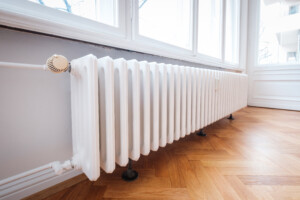
As heated water moves through radiators or other heating units, it releases heat to the surrounding space. Rather than blowing warm air into the room like furnaces, boiler systems transfer heat from a heated surface into the room.
Step 6: Cooler Water Returns to the Boiler
After releasing most of its heat, the cooled water returns to the boiler through return piping. The boiler reheats the water and sends it back through the system, repeating this process until your home has reached the desired temperature.
Step 7: The Boiler Shuts Down
Once your home has reached the right temperature, the burner or heating element turns off. The circulator may continue running briefly before the cycle ends, depending on the system. In gas and oil burners, exhaust gases produced through combustion are safely vented outside through the flue or exhaust system.
Types of Residential Boilers
Residential boilers are categorized by how they provide heating and the type of fuel they use.
Combi Boilers
Combination or combi boilers provide space heating and hot water from a single unit. Unlike systems that store hot water in a separate tank, a combi boiler heats water as needed when you turn on a faucet or shower. This compact design is especially useful in homes with limited space.
Because one unit handles both heating and hot water, sizing is important. A system that’s too small may struggle to heat several hot-water fixtures at one time.
System Boilers
System boilers provide heat for your home and work with a separate hot water storage container. Many of the major components needed for the heating system are built into the boiler itself, making installation easier than most traditional systems. The stored hot water also allows your home to serve multiple fixtures at once more easily than combi systems.
Conventional Boilers
Conventional boilers work with both a hot water cylinder and a separate cold water storage tank. These systems are usually found in older homes with established hydronic heating systems and require more space than combi or system boilers. However, they often perform better in larger homes with higher hot water demands.
By Fuel Type
Natural Gas Boilers
Natural gas boilers burn gas to heat the water circulating through your home. They’re common in areas with utility gas service available. Operating costs depend on the boiler’s efficiency, local natural gas prices, climate, and household heating needs.
Oil Boilers
Oil boilers burn heating oil stored in a tank on your property. They’re still common in some older homes and areas where natural gas infrastructure is limited. You need to monitor the amount of heating oil you have available and schedule deliveries as needed.
Electric Boilers
Electric boilers use electrical resistance elements rather than combustion to heat water. They don’t need the combustion venting equipment that gas or oil burners do, and operating costs depend on your local electricity rates and how much heat your home needs.
Boilers vs. Furnaces: What’s the Difference?
The biggest difference between a boiler and a furnace is what each system heats and how they move heat through your home.
A furnace heats air and uses a blower and ductwork to distribute warm air through vents. A boiler heats water and moves it through pipes in your home to radiators, radiant flooring, or baseboards.
Because furnaces circulate air, they often share ductwork and blower components with central air conditioning. Since boiler systems don’t use ducts, homes with boilers need a separate system for cooling.
Boilers also provide radiant or hydronic heat rather than forced-air heat, which can create more even room temperatures and eliminate the spread of dust and pet dander through your house.
Benefits of a Boiler System
Boilers offer several advantages that explain why so many homeowners continue to use them.
Efficient Heat Transfer
Water transfers heat effectively, so boilers can move substantial amounts of thermal energy through small pipes. However, keep in mind that actual efficiency still depends on the boiler itself, as well as its age, AFUE ratings, and your insulation.
Consistent, Even Heating
Radiators and radiant flooring release heat gradually rather than blowing bursts of warm air into the room. This creates more consistent temperatures and reduces the hot and cold cycles some homeowners experience with forced-air heating systems.
Quiet Operation
Boilers don’t rely on large blowers to push heated air through ducts, so a properly functioning boiler system is often quieter than a forced-air furnace. You may still hear the circulator pump or pipes expanding, but there’s generally less noise.
Less Airborne Dust
Because boilers don’t use ductwork to distribute heated air, they don’t continually circulate dust, pet hair, and other particles through the same type of air-delivery system used by furnaces. This is appealing for homeowners who want to reduce the amount of particulate matter in the air during the heating season.
Fewer Moving Parts
Boilers have fewer moving parts than most forced-air systems. Fewer parts means less mechanical wear. However, some parts still require maintenance, such as the burners, pumps, valves, and controls.
Common Signs Your Boiler May Need Maintenance or Repairs
Your boiler can continue producing heat even if it starts developing problems. Paying attention to changes in pressure, temperature, sound, and performance can help you spot issues before they become serious.
Common signs include:
- Uneven heating: Some rooms or radiators aren’t getting as warm as they normally do.
- Cold radiators: Trapped air, circulation problems, or low pressure may prevent water from moving properly.
- Leaks around the boiler or piping: Water around valves, pumps, fittings, or the boiler itself should be inspected.
- Banging, knocking, or gurgling noises: Unusual sounds may point to trapped air, mineral buildup, pressure problems, or circulation issues.
- Frequent cycling: A boiler that repeatedly starts and stops may have a thermostat, control, pressure, or sizing problem.
- Higher energy usage: A system that runs longer than usual may be losing efficiency or struggling to maintain your desired temperature.
- Difficulty starting: Problems with burners, ignition components, valves, or controls can keep the system from operating properly.
- Pressure that repeatedly rises or falls: Persistent pressure changes can indicate leaks, valve issues, expansion tank problems, or another system fault.
Annual cleaning and maintenance will help you catch these issues early. If the problem persists or worsens, contact Agway to have a technician sent out to diagnose the issue.
What Is the Ideal Boiler Pressure?
Boiler pressure can vary depending on your specific system, but most modern residential boilers operate around 1-1.5 bar when the system is cool and 1.5-2 bar while heating.
If pressure drops too low, it can prevent hot water from circulating effectively. If it rises too high, it can place additional strain on pipes and valves. Check your gauge periodically to determine the typical boiler pressure for your system and help identify any unusual changes later on.
Protect Your Boiler with EnergyGuard
In addition to providing reliable natural gas and electricity supply, Agway Energy Services® also offers Agway EnergyGuard® to all its customers as an included benefit. Boilers experience natural wear and tear over time, and EnergyGuard helps cover qualifying repairs to covered systems*.
For Agway natural gas customers, EnergyGuard covers qualifying components of the primary natural gas furnace or boiler such as circulator pumps, gas valves, ignition controls, pressure controls, zone valves, thermostats, and other important parts.
There are no service fees or deductibles for covered repairs. Residential natural gas customers receive coverage when service starts, while small business eligibility begins after 45 days.
If your boiler develops a problem, call Agway so the team can determine whether the repair is covered and arrange service when applicable. Sign up for Agway Energy Services today to combine reliable energy supply with EnergyGuard protection.
Boiler FAQs
Is a boiler the same as a water heater?
While a combi boiler provides both heat and hot water, most boilers cannot. System boilers and conventional boilers warm your home by circulating heated water through radiators, baseboards, or radiant flooring, but cannot produce hot water for faucets, showers, dishwashers, and other household uses.
How long do boilers last?
Well-maintained boilers often last between 15 and 20 years, though some systems can operate longer. Your boiler’s lifespan depends on installation quality, water conditions, maintenance, overall usage, and system design. Frequent repairs, declining efficiency, leaks, corrosion, and difficulty maintaining indoor temperatures are common signs your boiler is nearing the end of its lifespan.
What’s the difference between a firetube vs a watertube boiler?
In a firetube boiler, hot gases created through combustion travel through tubes that are surrounded by water. Heat passes through the tube walls and warms the surrounding water. In a watertube boiler, water travels through tubes heated externally by combustion gases. Watertube designs are more common in commercial or industrial settings.
What is the most efficient type of boiler?
There isn’t one boiler type that’s automatically more efficient than the rest. However, modern high-efficiency condensing boilers can achieve very high efficiency because they capture additional heat from exhaust gases that conventional boilers allow to escape. Actual performance depends on your boiler’s AFUE rating, installation, controls, and settings.


