
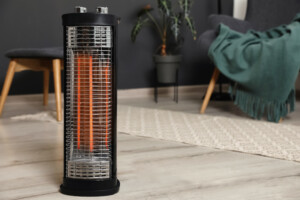
 Space heaters are popular during cold months when winter temperatures drop quickly. Though they offer convenient, targeted warmth, many homeowners wonder how much electricity these devices consume and how they affect monthly power bills.
In this article, we’ll explain how much electricity space heaters use and how they can help you stay comfortable without driving up utility costs.
How Does a Space Heater Work?
Most electric space heaters work by converting electricity into heat using internal heating elements, such as metal coils or ceramic materials. A fan or radiant surface then distributes the heat from these elements into the surrounding area. Unlike central heating systems such as furnaces, space heaters warm a single room, instead of your entire home.
Common types of space heaters include:
Convection Heaters
Convection heaters warm the air in the room, creating an efficient warming cycle. As the air near the heater warms, it rises and is replaced by cooler air, spreading heat throughout the space. These heaters are best for enclosed spaces like bedrooms or home offices.
Radiant Heaters
Rather than warming the surrounding air, radiant heaters produce infrared beams that are absorbed directly by people, furniture, and nearby surfaces. This type of heat feels similar to standing in sunlight or sitting near a fireplace. These heaters work well for spot heating when quick, direct warmth is needed.
Fan-Forced Heaters
Fan-forced heaters use internal fans to push warm air into the room. This allows heat to spread more quickly than convection alone. These models are best for rapidly warming small to medium-sized spaces and are commonly used for short-term heating needs.
How Much Electricity Do Space Heaters Use?
Space heaters use a significant amount of electricity compared to other household devices. This fact is especially important for residents in New York and Pennsylvania, since heating demand during cold weather is already high and electricity rates in these regions can vary.
Standard Space Heater Wattage Ranges
Most residential electric space heaters have settings that fall within these ranges:
- Low: 600-900 watts
- Medium: 1,000-1,200 watts
- High: 1,400+ watts
Because these units are resistive heaters, increasing the power doesn’t affect efficiency. At full power, they still convert electricity into heat at near 100 percent efficiency. You simply feel their effects faster.
Wattage by Space Heater Type
Different space heater types use electricity in slightly different ways. You can generally expect these ranges for each of the following models.
- Convection Heaters: 1,000-1,500 watts
- Radiant Heaters: 750-1,200 watts
- Fan-Forced Heaters: 1,200-1,500 watts
Though energy efficiency varies by design, most electric space heaters use similar wattage when operating at full power, since household outlets can typically only handle a maximum of 1,800 watts.
How Much Does It Cost to Power a Space Heater?
How much it costs to power a space heater depends on usage, wattage, and local electricity rate. You can estimate daily operating costs using the following formula:
(Wattage ÷ 1,000) × hours used × electricity rate per kWh = daily cost
For example, a 1,500-watt heater used for 6 hours per day at about $0.23 per kWh would cost:
(1,500 ÷ 1,000) x 6 x 0.23 = $2.07 per day
Over a month, that could add up to more than $60, depending on your overall usage.
Factors That Affect Space Heater Operating Costs
Several factors can affect how much a space heater adds to your monthly energy bill, including:
- Heater Wattage and Settings: Higher heat settings naturally use more electricity.
- Hours of Daily Use: Longer run time increases costs.
- Location: Electricity rates in some areas, such as New York, are higher than in other states.
- Room Insulation: Poor insulation allows heat to escape faster, resulting in longer run time.
Choosing the Right Space Heater for Energy Efficiency
Selecting the right heater can help reduce unnecessary electricity use. Consider the following factors to choose a unit that fits your needs.
Match Heater Size to Room Size
Small heaters perform best in bedrooms or offices, while larger rooms may require higher-capacity models. Using an oversized heater in a small space can waste energy.
Look for Adjustable Controls
Heaters with thermostats, timers, and multiple heat settings provide better temperature control and prevent continuous full-power operation. This type of control and customization allows you to tailor heating based on conditions in your home helping to save energy.
Choose Safety and Efficiency Features
Look for models with modern safety and efficiency features, such as automatic shut-off, tip-over protection, and energy-saving modes. ENERGY STAR models are known for their higher efficiency, allowing you to maintain a comfortable temperature while lowering overall energy consumption.
Final Thoughts
Space heaters can offer convenient warmth, but they can also draw a significant amount of energy when used regularly. Understanding operating costs and efficiency options can help you use them more wisely.
FAQs About Running a Space Heater
Is it cheaper to run a space heater or central heat?
Whether a space heater or central heat is cheaper depends on how and where you use each system. Space heaters are efficient for heating a single small area, but multiple heaters used across your home for extended periods may cost more than central heating.
Do space heaters use a lot of electricity compared to other appliances?
Yes, many space heaters use a significant amount of energy compared to other appliances ‒ around 1,500 watts at the highest setting, which can noticeably increase monthly utility costs.
Can a space heater increase my electric bill?
Yes, regular use of a space heater can increase your electric bill, especially if you use it on high settings or for extended periods of time. Using efficiency settings or improving insulation can help conserve energy.
What size space heater do I need for my room?
Most guidelines recommend using a space heater about 10 watts per square foot of your room. For example, a 150-square-foot room likely needs a 1,500 watt heater.
Can I run a space heater all night safely?
While older models are not safe to run overnight, modern heaters come with several safety features designed for extended use, such as tip protection, overheat protection, and thermostat control. Place them on a hard, flat surface, away from flammable materials, with at least three feet of clearance on all sides. Consult your owner’s manual for further instructions.


